
Bequant lets you measure the quality you deliver to your network users and monitor both your network equipment and the performance of applications.
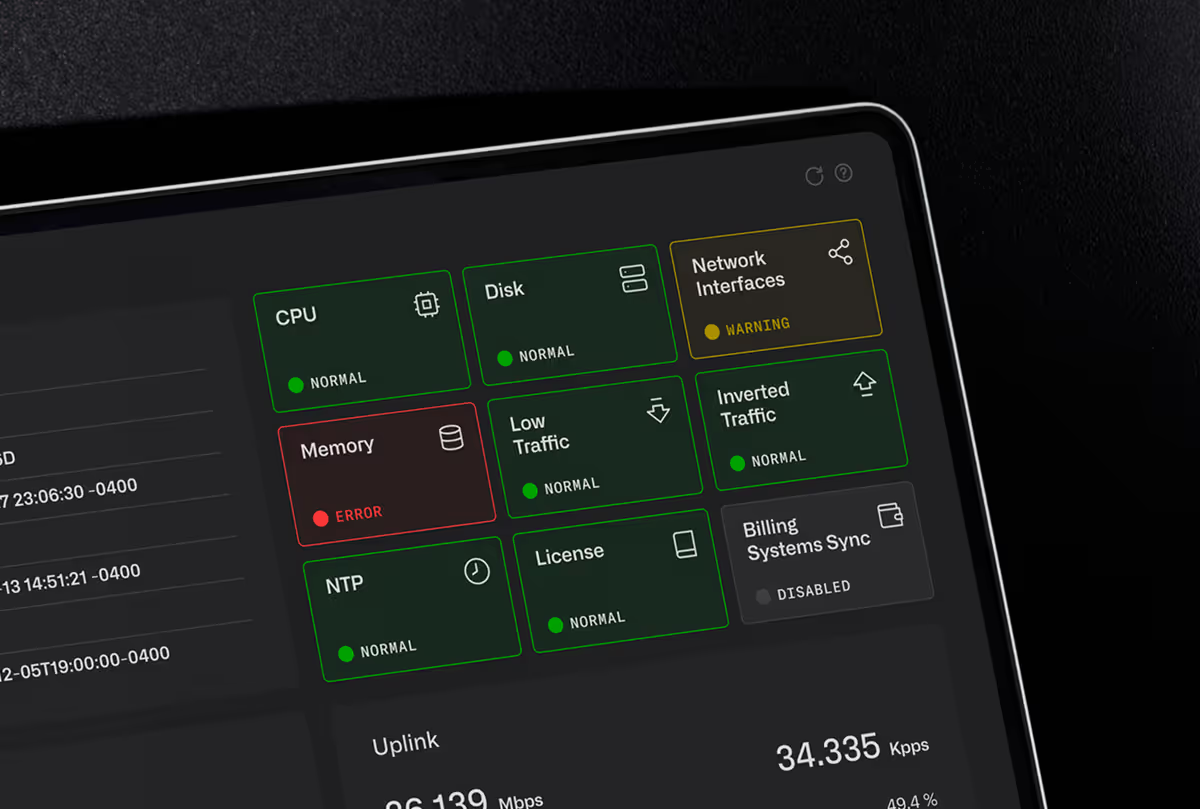
Resolve support calls faster
Reduce support calls and truck rolls

Intelligence about your network
The DPI and network visibility from Bequant allow us to see what is happening in our network in real-time. Our customer support can diagnose everyday problems with it, and it also helps us detecting those areas of the network where we are approaching congestion.
Real-time DPI
Diagnose network issues in real-time with Deep-Packet Inspection (DPI).
With DPI, you can see which applications are running in your network. Paired with real-time metrics, it enables you to diagnose customer issues that would otherwise require a truck roll — since many problems stem from specific applications.


600+ ISPs powered by Bequant




























Detect congested equipment
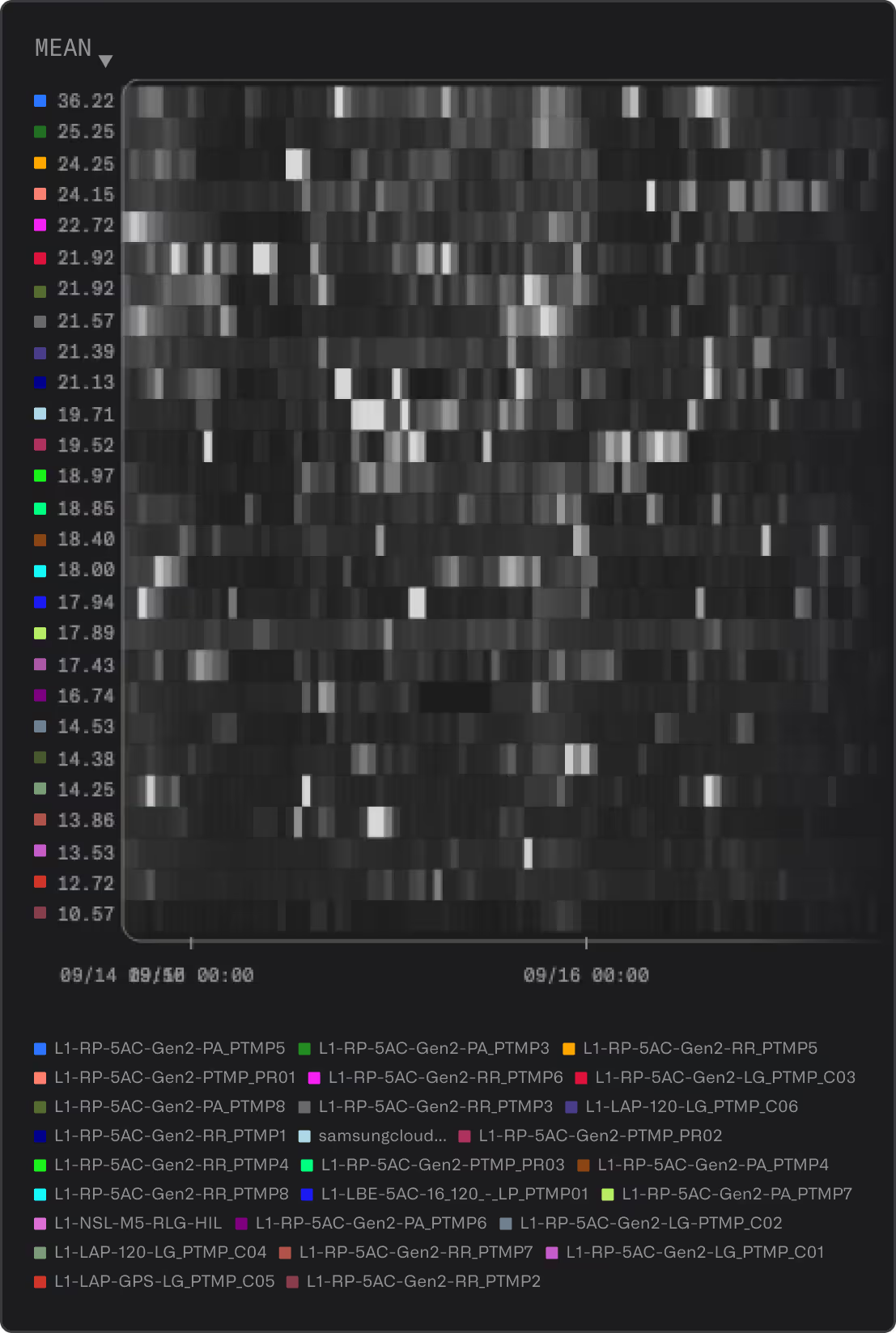
Heatmaps reveal the busiest network equipment.
Easily compare access points, OLT ports, and other equipment to spot congestion and keep the network running smoothly.
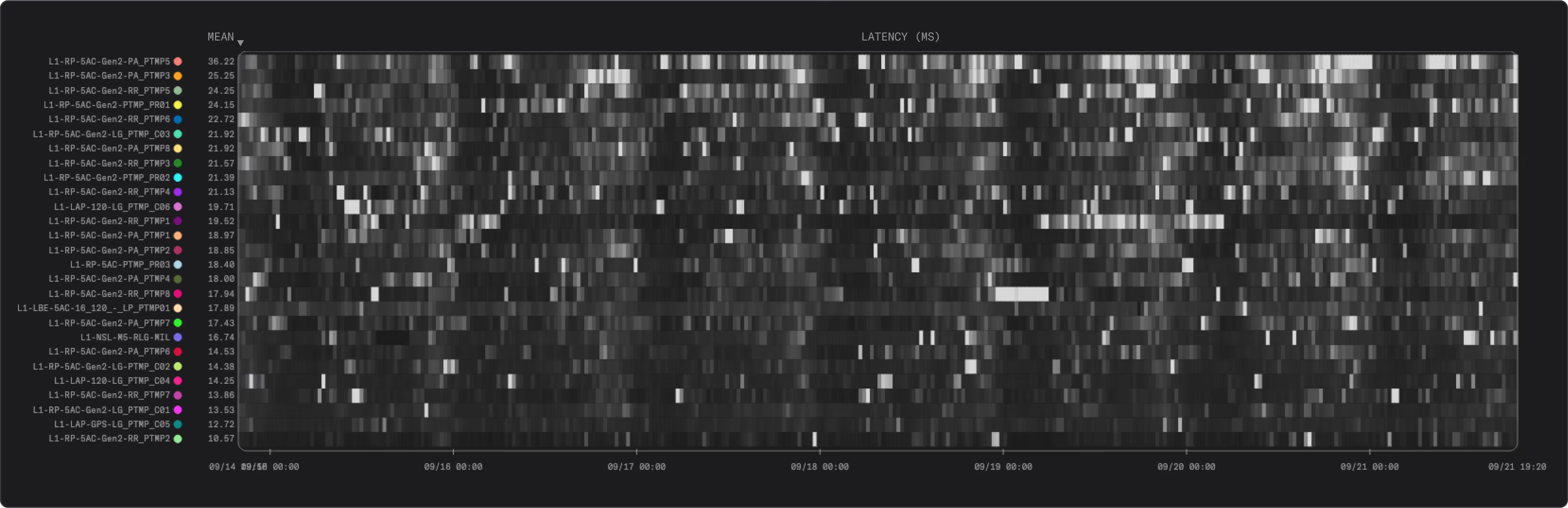
With scatter-plots, it becomes possible to identify whether congestion is caused by a network device operating at too high a speed.
For example, in the chart for an access point, congestion appears once it goes beyond 50 Mbps. This situation can be improved by using Bequant to enforce a maximum throughput for the device, in this case applying a 50 Mbps limit.
Monitor user network quality
Measure Quality of Experience in your network.
We provide metrics to monitor the overall Quality of Experience delivered by your network to your customers, as well as detailed historical information about each subscriber to let you diagnose problems.
Monitor key network quality metrics
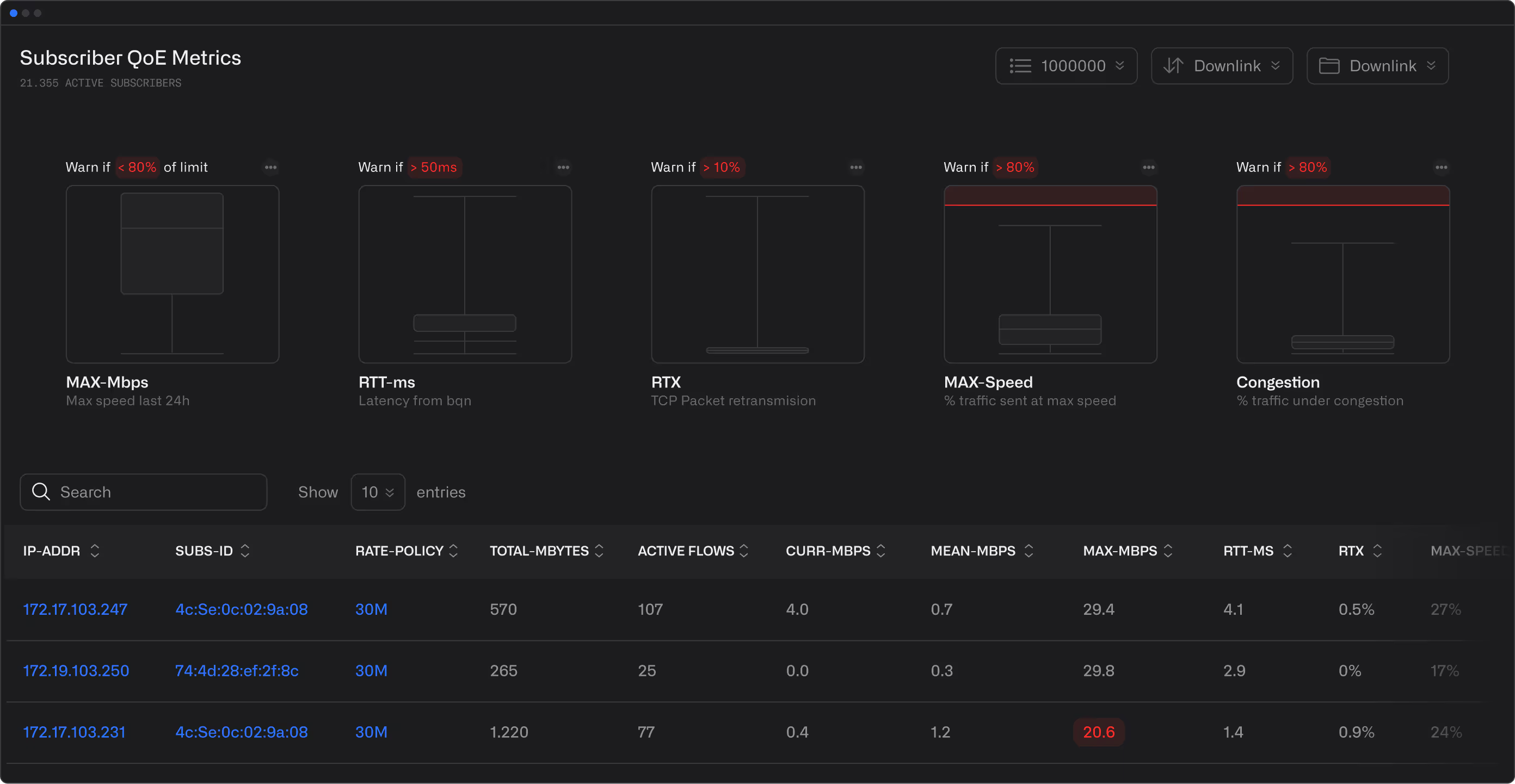
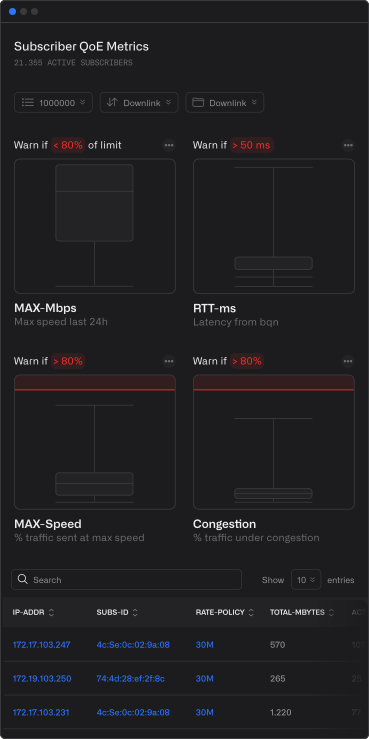
The BQN platform monitors 5 key metrics to measure the Quality of Experience of all the subscribers in your network in real-time. It shows the distribution of those key metrics, with configurable warning thresholds, so that you can easily see your network status.
The key metrics include the maximum speed attained during the last 24 hours, the latency, the percentage of packet retransmissions (i.e. losses), the percentage of traffic suffering congestion (which we obtained with an advanced learning algorithm), and the percentage of traffic transmitted at maximum speed.
Lorem Ipsum is simply dummy text of the printing and typesetting industry.
Detailed subscriber metrics
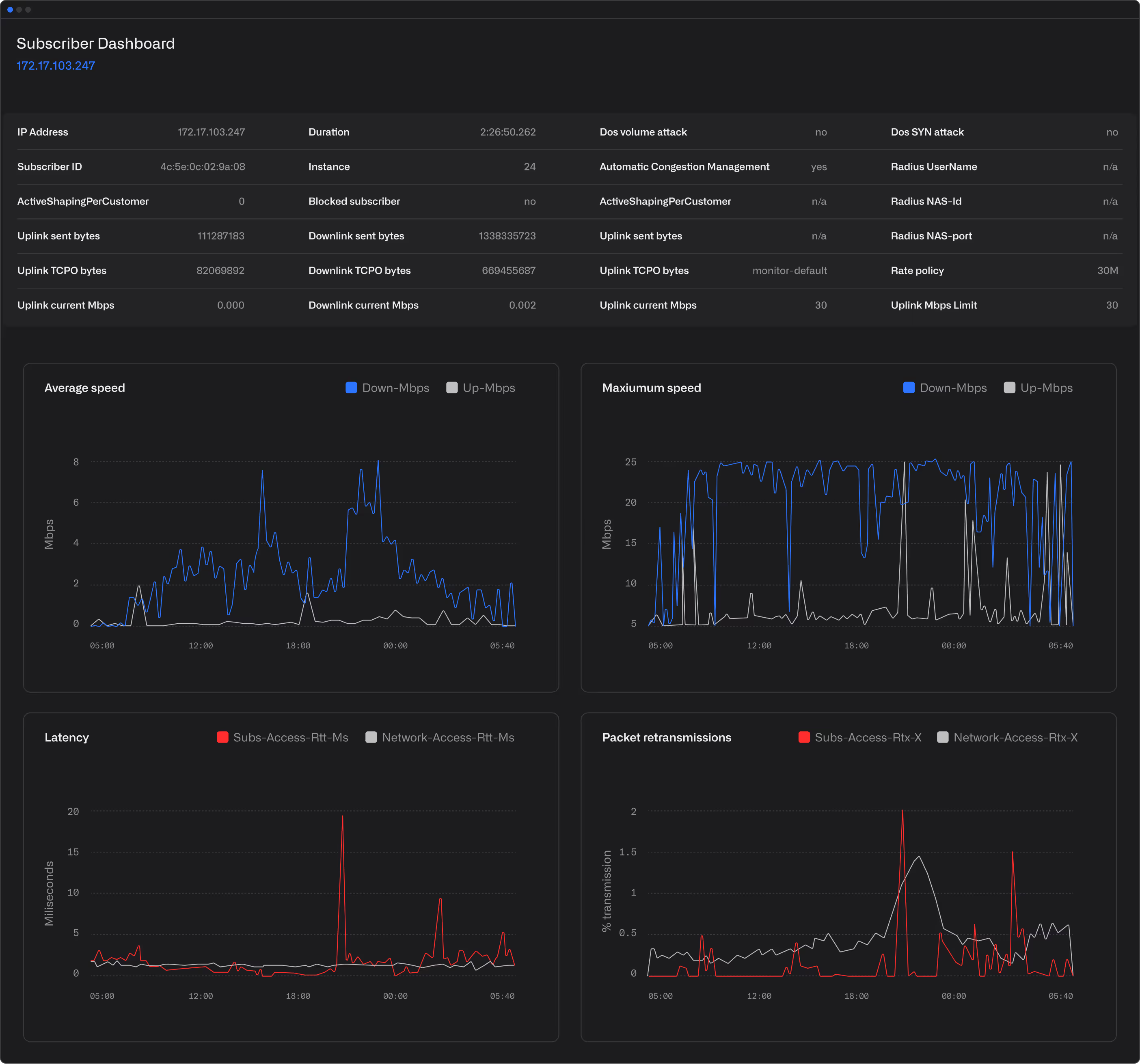
When you need detailed information about one subscriber, the BQN platform will show you three months of data for the key QoE metrics defined above, together with metrics to show the average usage, the effects of ACM on latency and retransmissions and the rate of flow creation.
Finally, our DPI will let you see what are the main services used and the latencies to those services at different points in time, as well as the active flows being used by each subscriber. In summary, a comprehensive view into the status and history of each subscriber.
Lorem Ipsum is simply dummy text of the printing and typesetting industry.


Real-time performance metrics
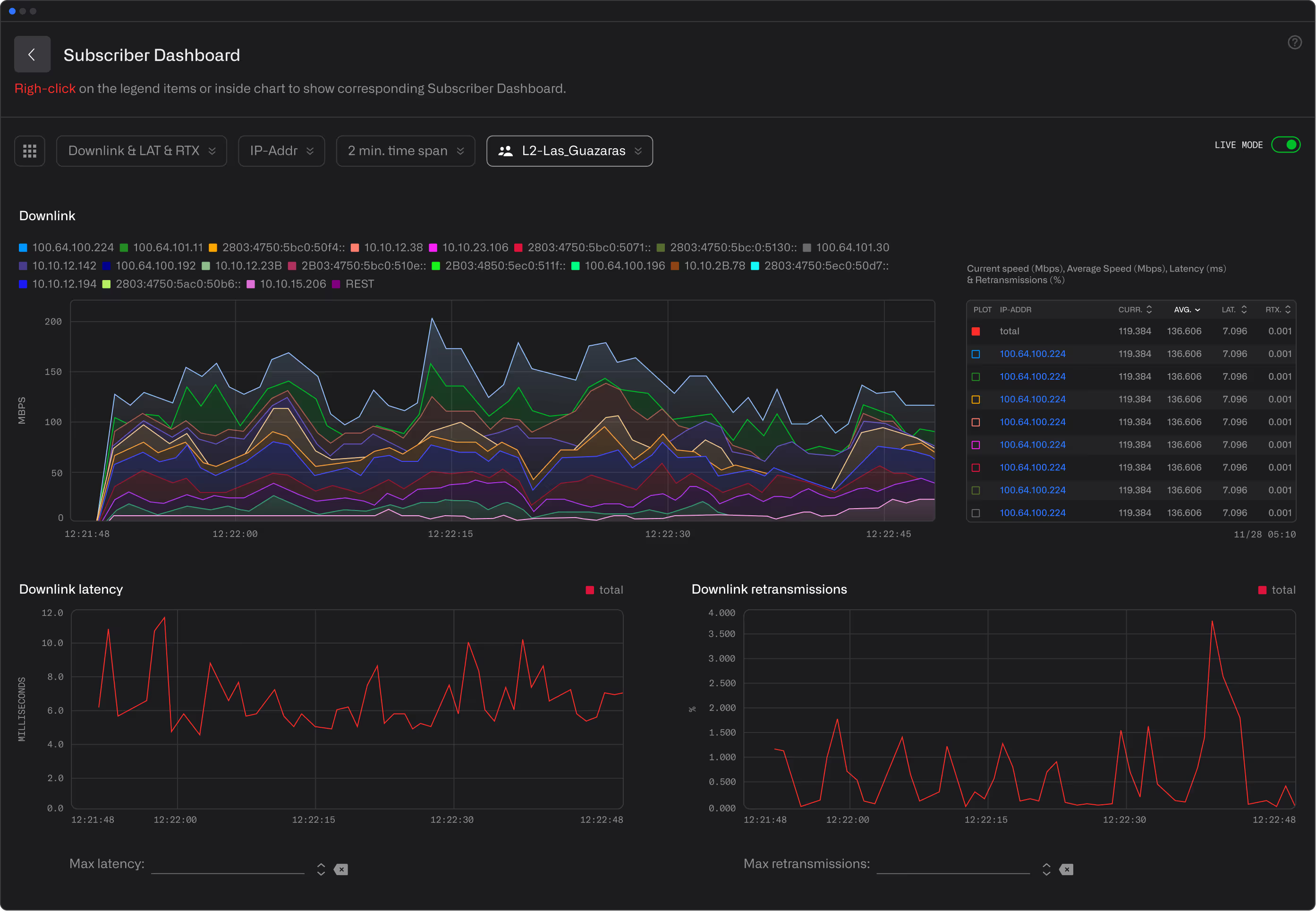
See throughput, latency, and packet loss in real time.
Track metrics for your entire network or drill down to a single device — such as an access point or OLT port — and identify the most active users with their real-time stats.

Monitor applications
Monitor the performance of applications in your network.
Bequant shows the delay from your network to each application server so you can understand how applications perform and compare results across different Internet service providers.


Percentage of traffic for main clients and servers in tcp:xboxlive.
Identify customer plan upsells
Spot users who consistently reach their plan limits.
Bequant provides metrics that highlight customers who regularly consume all the bandwidth available to them. With this data, you can offer higher-rate plans that better match their needs while also increasing revenue potential.


FAQ
What does proactive (vs. reactive) network management look like for a regional ISP?
First, the network has deployed a traffic optimization element such as Bequant, because the first level of proactiveness is improving network performance without any human intervention, just using a closed control loop that is continuously processing the traffic, identifying issues and solving them as they occur.
The second level of proactiveness is for that traffic optimization product to provide network visibility that is accurate and detailed enough to detect QoE issues as soon as they happen, even before the affected customers complain.
The third level is importing the traffic optimization metrics into the network management system for analysis and notifications. Next generation management systems also integrate BSS and OSS system information to have a more holistic view of the subscriber satisfaction: the experienced network quality obtained from traffic optimization along with the history of interactions with customer support.
How does AI-driven network analytics reduce operational costs for ISP support teams?
AI-driven network analytics speed up the identification of network problems by allowing the support team to express the goals of the issue search rather than following the steps needed to find them, which is more time consuming and requires knowledge of the product capabilities. An AI assistant is a quick way to obtain results for the most common cases, leaving direct interaction with the visibility data for the most advanced cases.
How can a multi-site ISP monitor subscriber traffic performance across all locations from one platform?
By using a traffic optimization and visibility product that has enough capacity to process all the network traffic from one single location. If geographically distributed locations are required, Bequant servers can be configured in a cluster where any location is accessible from any of the other sites. Of course, collocated servers can also be added to the cluster to collaborate seamlessly with the rest.
Which technical network metrics should an ISP track to measure subscriber quality of experience?
The network metrics that can signal degradation of the quality of experience better are congestion, losses and latency. If any of these three or all of them combined increase and remain high for some time, there is a high probability that the customer is suffering from a degraded service. Latency affects the responsiveness of an application, critical in real time applications like teleconferences and gaming. Losses reduce the application available goodput (actual transfer rate of application content), decreasing the effective speed. Finally, congestion brings a degraded experience, with latencies and losses increasing while the available goodput collapses.
This is the reason a product such as Bequant is important; to mitigate QoE issues and to give an ISP the network visibility it needs to proactively solve network issues.
How can an ISP combine traffic optimization and network performance data in a single dashboard?
Traffic optimization and network performance data can be combined in a product such as Bequant, that optimizes traffic at the same time it provides metrics of the resulting network performance.
The provided metrics leverage on the traffic optimization part, because Bequant TCP optimization provides accurate latency and losses values, obtained in flows under load, which is what end users experience. This accuracy is key for reliable congestion detection.
TCP Optimization also measures its own acceleration effect by leaving a small fraction of the traffic as a control group to compare the improvements against.
In the latency case, Bequant provides three separate latency metrics to give as much visibility as possible: an average of minimum values (a lower bound of latency values), the median and the percentile-80 (value not exceeded by 80% of the measured values).
How can ISP support teams detect congestion before customers open support tickets?
By using a product with network visibility such as Bequant, the ISP support team have access to key QoE indicators per subscriber and per network sections that will allow them to focus on impending network issues and address them proactively. Bequant has an AI Congestion Mitigation feature (ACM) that is constantly looking for congestion symptoms per individual subscriber. ACM automatically acts to reduce congestion, but it also reports the congestion found to the network visibility feature, so support teams can rate subscribers based on their experienced congestion. Bequant has tools to facilitate data analysis, such as an automatic ranking of the worst percentile of congestion-suffering subscribers.
Bequant also enables traffic captures and a live view of a subscriber connection at any given time. This real-time view of the network at different levels is what Victor de la Nuez, CEO of WiFi Canarias, highlights about Bequant.
Which subscriber-level network signals can reveal customers at risk of churn before they complain?
The network metrics that can signal degradation of the quality of experience better are congestion, losses and latency. If any of these three or all of them combined increase and remain high for some time, there is a high probability that the customer is suffering from a degraded service and will soon complain, or worse, decide to leave without prior notice. This is the reason a product such as Bequant is important; to mitigate QoE issues and to give an ISP the network visibility it needs to proactively solve network issues before they cause churn.
See more information in this Case Study on churn reduction.
How does application-level DPI visibility help ISPs troubleshoot subscriber performance problems faster?
It helps by providing key insights into how the subscriber is using the Internet connection. For example, using a DPI enabled product such as Bequant, a technical support team can see what applications are being used at the home network and realize that the reported problem is related to that usage, for example to a big download in combination with streaming sessions by several members of the family.
How can an ISP identify which applications (streaming, gaming, P2P) are driving the most bandwidth usage per subscriber?
To identify the applications with the biggest bandwidth demand, a traffic equipment with deep packet inspection (DPI) is needed. Bequant has DPI capabilities and it can identify the most popular applications of a specific subscriber, a group of subscribers or the network as a whole. Traffic management rules can be defined to manage those applications and prevent their congestion effects during peak times.
Find an example on how an ISP solved streaming overload in La Harpe Telephone Case study.
What is the difference between a flow monitor and an integrated traffic-optimization and analytics platform?
A flow monitor is not an active element, it does not act on the traffic, it gets flow information from the traffic devices and makes that information available for analysis. A traffic optimization platform such as Bequant, is deployed online and improves the traffic performance leveraging on the metrics it gets, so the metrics become actionable straight away, even when nobody in network engineering is analyzing the data.