Bequant Improves Network QoE and Visibility with Application Speed and Latency Metrics in Latest Release
Bequant is excited to announce the new R4.28 release, delivering powerful new features to optimize network performance, get deeper visibility into network application metrics, and enhance subscriber’s Quality of Experience (QoE).
----------------------------------------------------------------------------------------------------------------------------------------
TL;DR
Bequant’s R4.28 release offers:
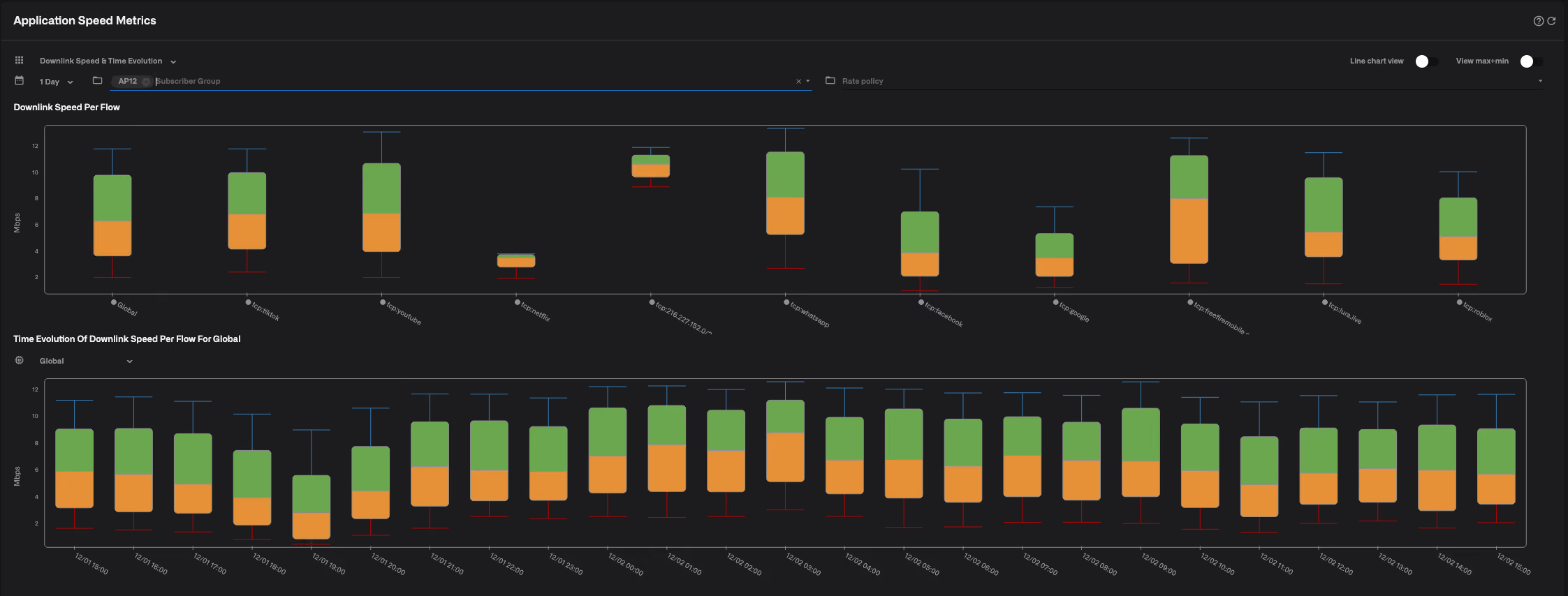
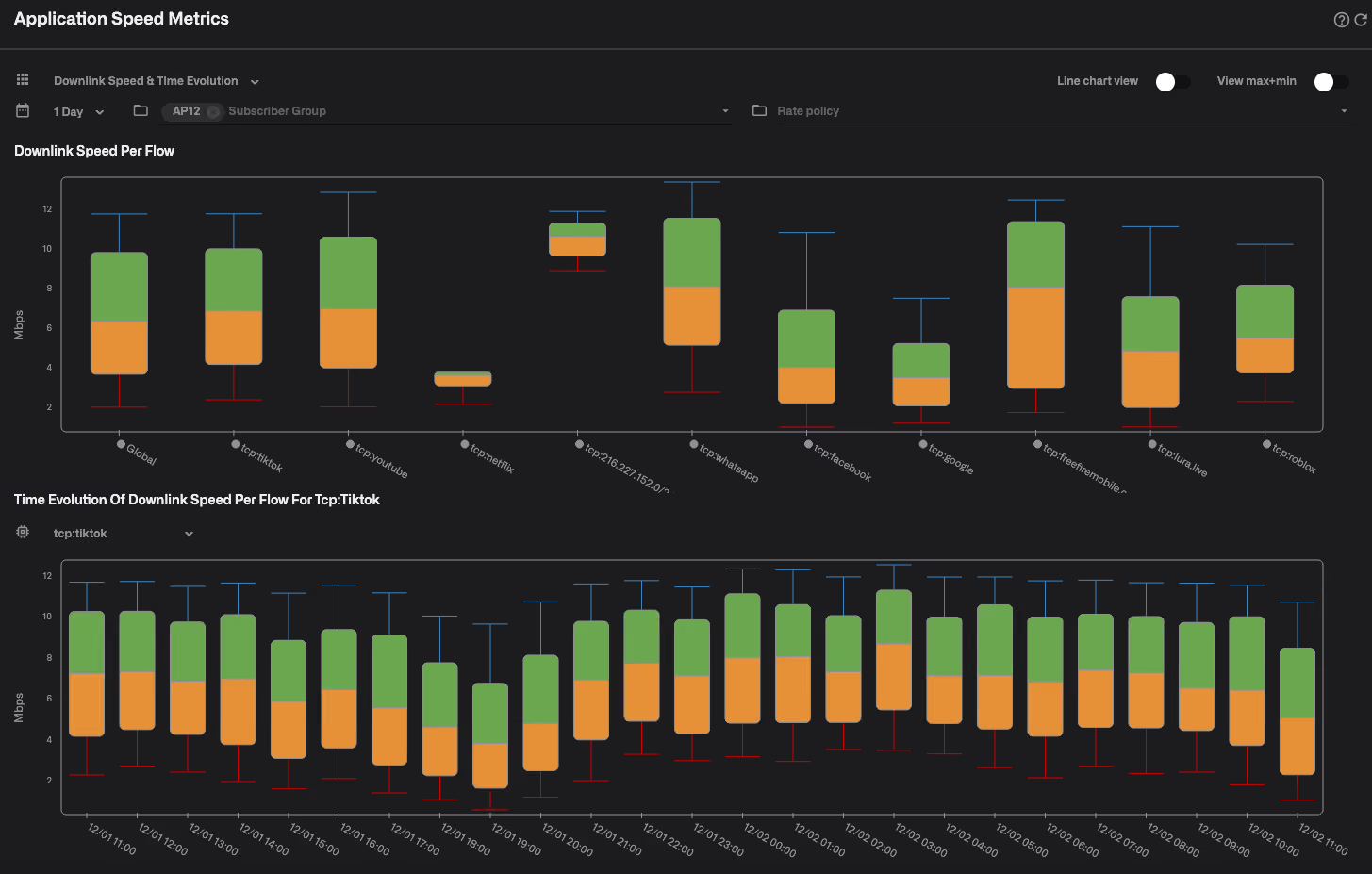
- Per-application speed metrics (examples: Netflix, Apple, Xbox, etc). The metrics scope can be the whole network, a subscriber, a rate-plan or specific subscriber-groups (including Access Points or OLT ports). In addition to the speed distribution, its evolution over time is also included.
- Per-application latencies have been redesigned along the lines of the new application speed page, with all the information displayed together.
- Full support of TCP ECN (Explicit Congestion Notification), which allows congestion minimization without packet drops.
- In a subscriber dashboard, the latency and retransmission charts also include the values of the subscriber groups, to serve as a direct reference.
Launched in Q2 2025, Bequant’s R4.27 release offers:
- New DSCP marking capabilities for critical traffic prioritization / controls.
- A standard traffic flow policy configuration that fits 95% of deployments out of the box.
- A set of default DPI profiles, with signatures that can be easily updated with every new release.
-------------------------------------------------------------------------------------------------------------------------------------
Here’s what’s new.
- Better Application Metrics
- More & Better Network Traffic Controls
- Even Better Visibility
- 3rd party Integration Improvements
Better Application Metrics
Analyze per-application flow speed. You can now monitor how well you are delivering different applications (e.g., Netflix, TikTok, Xbox) to your customers. We measure the actual speed your subscribers are experiencing with each application, which can be very different from the network speed. This analysis can be performed for the full network all the way down to a single subscriber, and you can also see the evolution over time. For instance, you can compare the application speed of a ‘complaining’ subscriber against other subscribers on the same Access Point to see if it is a specific subscriber’s issue or an issue affecting all subscribers on that Access Point.
Analyze per-application internet latency. Complementing the application speed graphs, the new graphs for Internet latency give you a full picture of the quality you are delivering per application. They let you compare the latencies from your network to the different content providers and see if you obtain lower latencies from certain Internet service providers, which will determine the quality you deliver to your customers, and how those latencies evolve over time.

More & Better Network Traffic Controls
DiffServ& DSCP. Intelligent Differentiated Services Code Point markings to prioritize critical applications. We’ve added:
- DSCP profiles: flow policies can be selected based on the received traffic’s marks. That way, an external system can be used to classify the traffic and BQN can take care of the policy enforcement.
- Marking DSCP. A flow policy can now apply custom DSCP marks to traffic as a function of the DPI application found (say, VoIP or video), the subscriber, the subscriber group, the time of day, etc. This allows DSCP marking traffic, like VoIP or real-time video, in the downlink direction, which often does not happen because those marks are frequently bleached in Internet, and allows home WiFi routers to then enforce QoS, which will result in a better overall customer experience.
Standard flow policies to enhance QoE. Bequant now provides a simpler, standard subscriber flow rule set aimed at improving the QoE of network users, resulting in a certain reduction in throughput for the whole network during peak times.
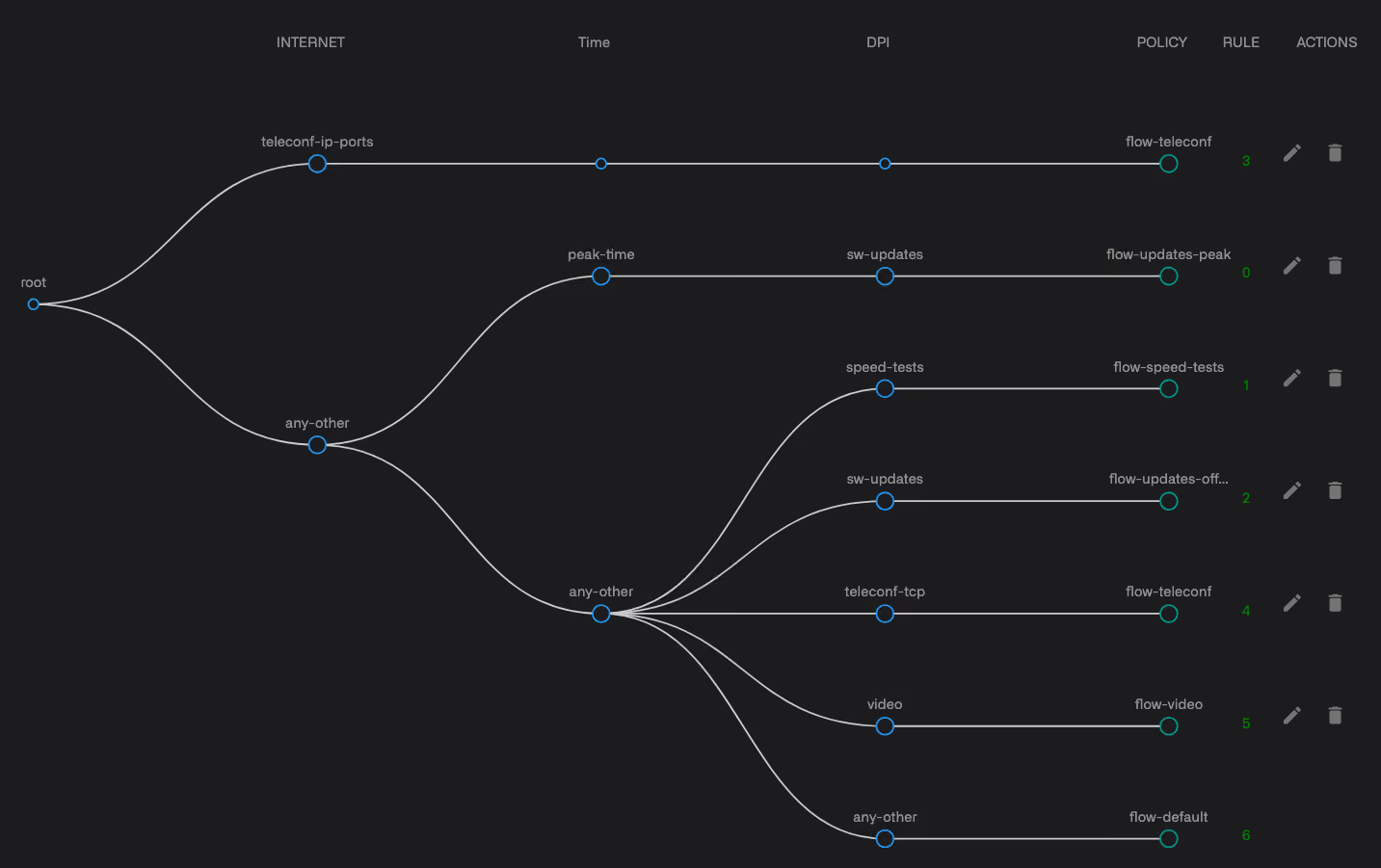
This set of rules ensures:
- Speed tests attain the user rate limit, even if other applications are being used simultaneously.
- A small percentage of subscriber’s rate limit is reserved for applications other than video streaming and software updates, which can otherwise swamp interactive applications like online gaming and VoIP.
- On reaching the user rate limit, teleconference traffic (e.g. Teams, Zoom, Meet, WhatsApp) will be prioritized, while software updates will get lower priority.
- Prioritization of teleconferencing and VoIP-marked traffic by downstream Wi-Fi routers and APs via DSCP mark enforcement.
One-click DPI Signature updates. We have added dozens of new DPI signatures to the DPI profile for gaming, streaming, and other services and we’re continually adding more. No need to wait until the next software release to get the new signatures.
Full TCP/IP ECN support. Our TCP proxy enforces TCP Explicit Congestion Notification, allowing congestion and latency minimization without packet drops. As a proxy, it can enable ECN support even if the server, or the client, does not support it.
Even Better Visibility
Enhanced subscriber-group insights.
- Subscriber dashboard compares metrics with those of the groups it belongs to. The single subscriber dashboard now includes KPI trend lines (latency, throughput, packet retransmission %) of all groups of which that subscriber is a member, say, AP, tower, backhaul, etc.
- You can now pause a live DPI analysis to examine in depth the flows being downloaded at a certain time, and then resume the live DPI analysis.
- The Subscriber Group dashboard and Subscriber Groups page now show a chart with the number of active users over time.
- To facilitate better analysis of the distribution of subscriber group metrics, a KPI metrics boxplot has been added to the Subscriber Groups page.
Reach back in time. Node statistics are now available for up to 3 months in the past.
3rd party Integration Improvements
Bequant continues to add and improve our integrations with 3rd party billing and management systems.
- New UISP connector. Makes connection to Ubiquiti ISP billing/management system much easier. Added support of separate CRM/NMS API Keys for UISP version 2.4.220 and later.
- IPv6 dual-stack route groups. With the BQN platform running as a RADIUS proxy or accounting server, RADIUS attributes 99 (Framed-IPv6-Route) and 22 (Framed-Route) settings can be ingested to establish subscriber groups based on static route information.
More new features
- It is now possible to back up not just the device configuration, but also the subscriber information obtained from Radius, REST or Billing systems.
- It is now possible to bypass MPLS and PPPoE traffic.
- More flexible software installation allows storing of multiple versions and activation of selected versions.
- Disable / Enable individual BQN physical Ethernet ports; useful when forcing an interface reconnection.
- For a full list of release notes, see here.
If you are not using our product yet, you can try it out for free here; if you are already our customer, just contact support@bequant.com to get the latest version into your system.