DigitalC Bridges More with Less using Bequant
DigitalC, a community-focused nonprofit ISP serving Cleveland and Detroit, faced a common challenge for providers bridging the digital divide: managing a growing subscriber demand that could outstrip available backhaul capacity. By deploying the BQN QoE platform, DigitalC optimized its existing 1Gbps and 10Gbps circuits, integrated its Splynx billing system for seamless management, and maintained network stability even during a major fiber outage—proving that closing the divide can mean managing bandwidth smarter rather than simply buying more.

Background & Challenge
Headquartered at the MidTown Tech Hive in Cleveland, Ohio, DigitalC is a nonprofit internet service provider operating in Cleveland and Detroit. The organization delivers high-speed home internet and digital skills training through a community-based model built to reach neighborhoods long underserved by traditional providers.
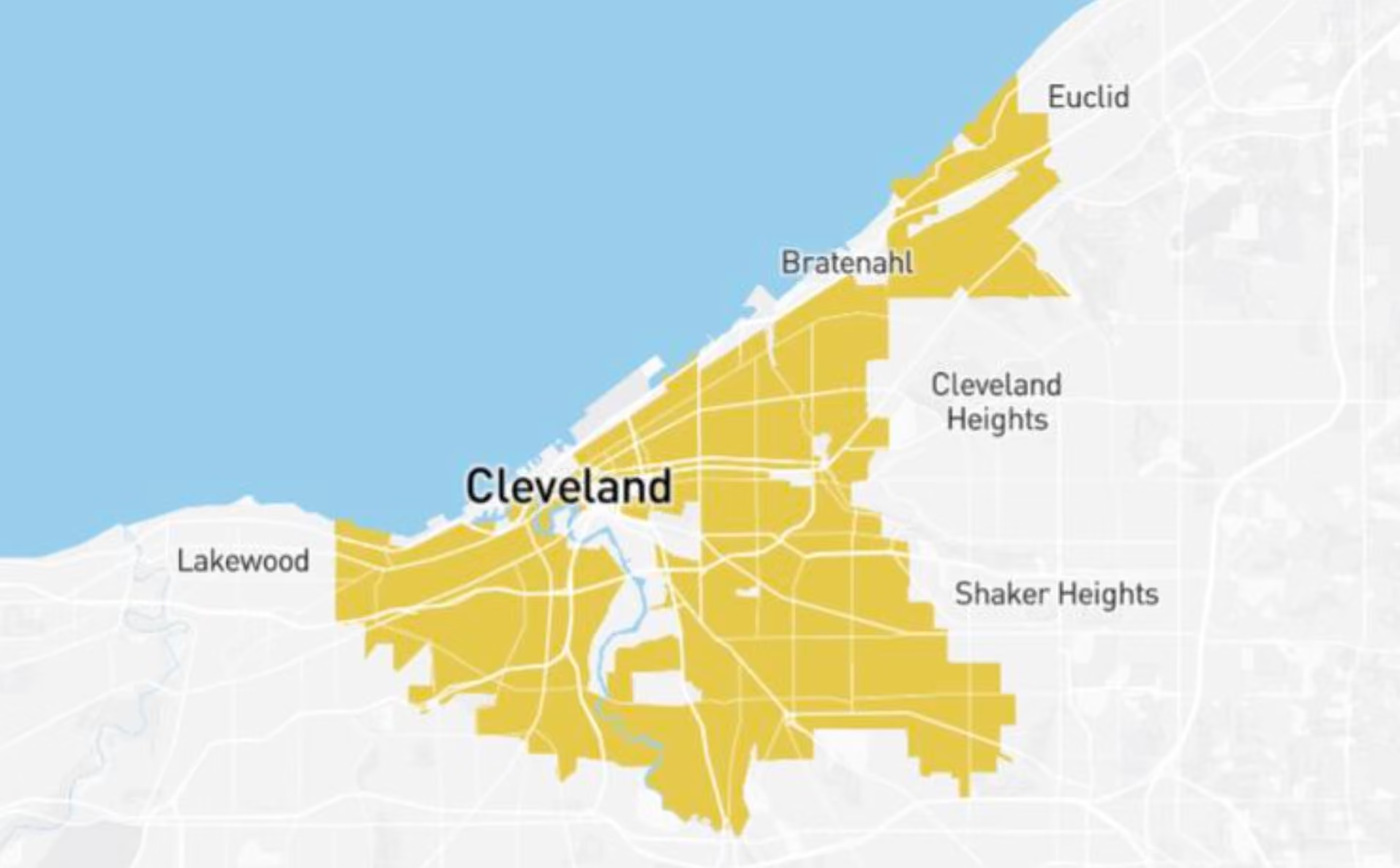
(Euclid, Bratenahl, Cleveland Heights, Lakewood, Shaker Heights)
The DigitalC network currently serves approximately 8,500 households using ngFWA Technology from Tarana Wireless. Recently, DigitalC faced a key scaling milestone: a network segment with close to 4,000 subscribers was supported by a single 10 Gbps DIA circuit. With limited capital to upgrade monthly recurring circuit costs and minimal support personnel, DigitalC needed to maximize its existing infrastructure.
The urgency peaked ahead of the winter holidays. With an expected surge in gaming and 4K/HD video streaming, leadership anticipated network congestion and worked proactively to identify a solution that would avoid a wave of support calls and protect the brand experience – which was recently recognized alongside Tarana with the 2025 Fierce Network's Award for Digital Divide Impact.
Objectives
DigitalC sought a network optimization solution that could:
- Manage Congestion: Keep aggregate streaming and gaming traffic within circuit limits without sacrificing user experience.
- Enhance Efficiency: Use TCP Optimization (TCPO) and Automatic Congestion Management (ACM) to increase subscriber density per circuit.
- Streamline Operations: Integrate directly with the Splynx billing system to automatically synchronize subscriber rate plans.
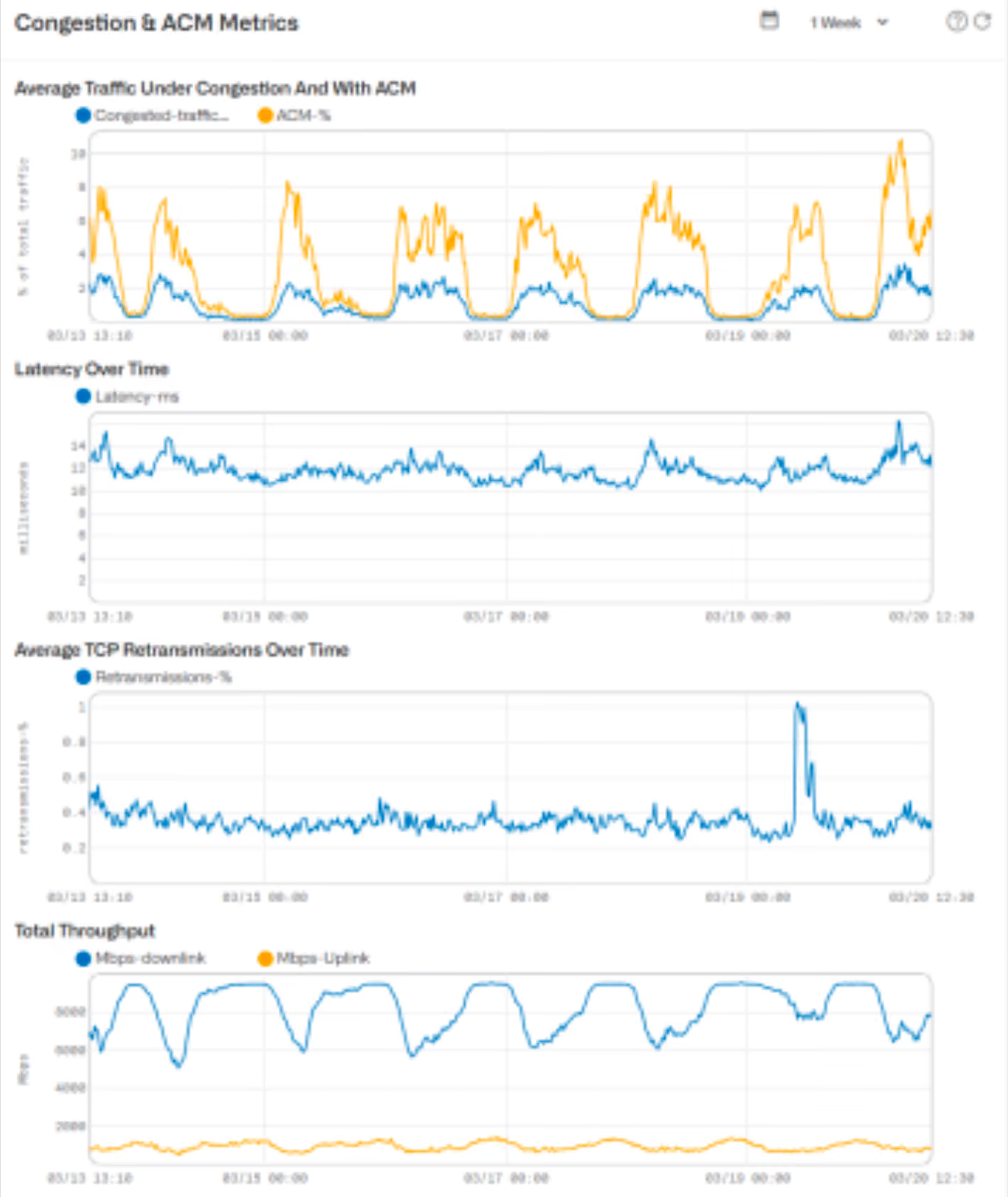
- Improve KPIs: Reduce latency and TCP retransmissions while increasing overall throughput.
- Gain Visibility: Provide granular, per-subscriber performance metrics to the support team.
The Solution
Originally, during the pilot phase, DigitalC deployed the Bequant QoE appliance on one of it's busier network segments. The implementation followed a structured phase:
- Baseline: KPIs were gathered to establish a performance benchmark.
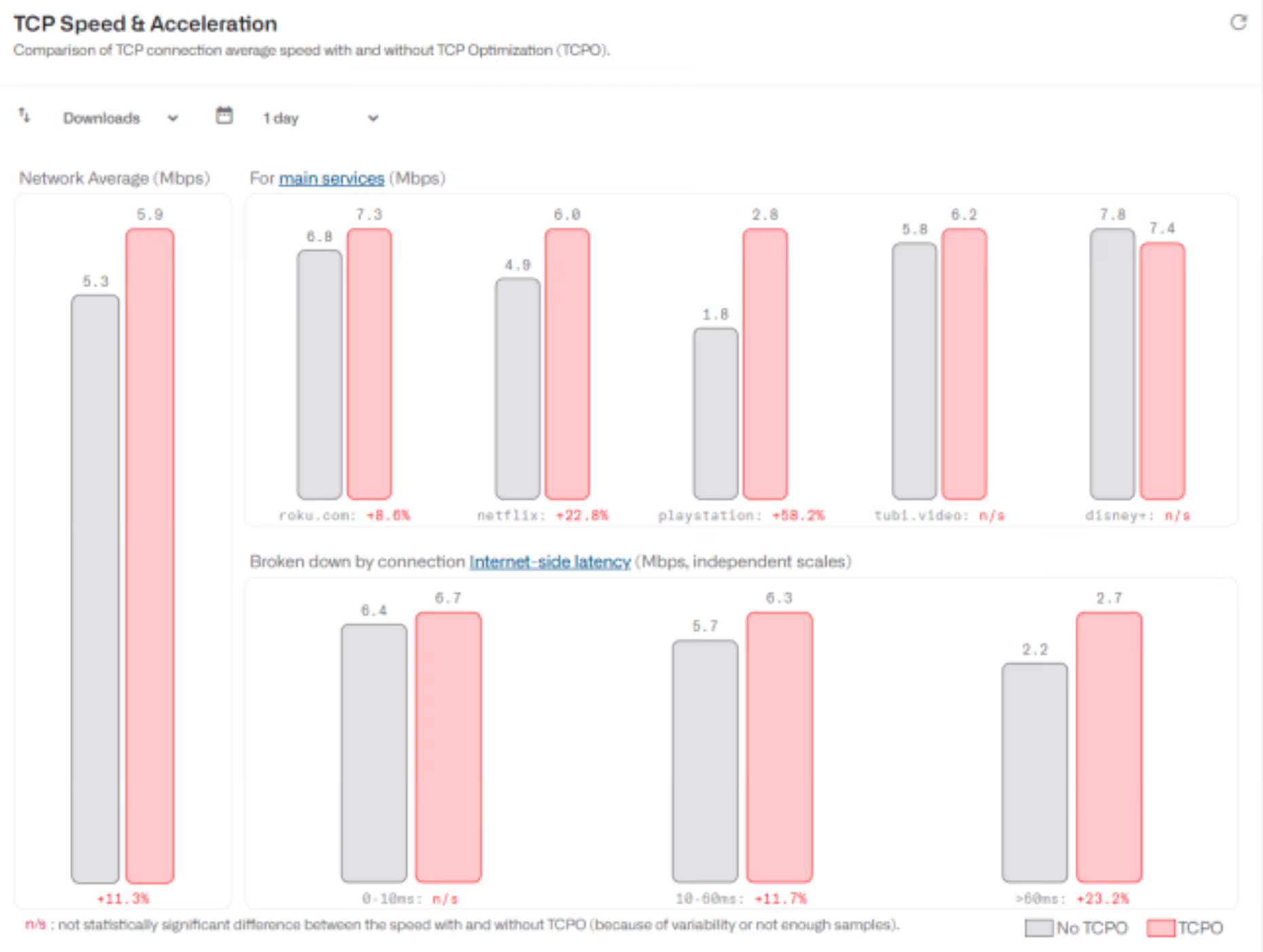
- Optimization: Bequant's TCPO and ACM were enabled. These technologies accelerate the "handshake" between servers and end devices, reducing the impact of in-home Wi-Fi packet loss.
- Integration: The BQN appliance was linked to Splynx, allowing the QoE software to recognize individual subscriber IP addresses and enforce speed tiers dynamically.
After the initial proof-of-concept, DigitalC then deployed the BQN appliance at each of it two network cores.
Results
By implementing Bequant QoE, DigitalC achieved immediate improvements in network efficiency. The TCPO functionality significantly reduced the "chattiness" of web traffic, while ACM and traffic optimization ensured that high-bandwidth streaming did not "crowd out" time-sensitive traffic like Zoom calls or gaming. With network efficiency improvements, DigitalC was able to delay a costly upgrade to their internet circuit and still bring on additional paying subscribers on their existing infrastructure.
DigitalC originally planned to evaluate three different QoE vendors. However, after seeing the immediate stability and ease of integration provided by Bequant, they canceled all other trials.
Streaming Optimization Results
Of all KPI improvements, vital HD streaming video applications on the DigitalC network were dramatically enhanced using a combination of TCPO as the transparent TCP proxy; ACM to reduce overall network congestion typically caused by customer premises equipment (CPE) buffer bloat; and setting a single video traffic profile type that was applied to all subscribers in the network segment.
Stress Tested IRL
The solution was stress tested by reality. Following the move to full production — serving over 4,000 subscribers across 200+ Tarana Base Nodes — one of DigitalC's two 10Gbps internet exchange circuit failed. This forced 16Gbps of demand into a remaining 10Gbps pipe. Because the BQN appliance was in place, it intelligently prioritized traffic, allowing the ISP to survive the outage with virtually no impact on subscriber experience.
Network Visibility & DPI
With per-subscriber network KPI metrics, DigitalC was able to easily identify subscribers with weak KPIs: say, congestion caused by in-home Wi-Fi routers. The result: faster issue resolution with more proactive support.
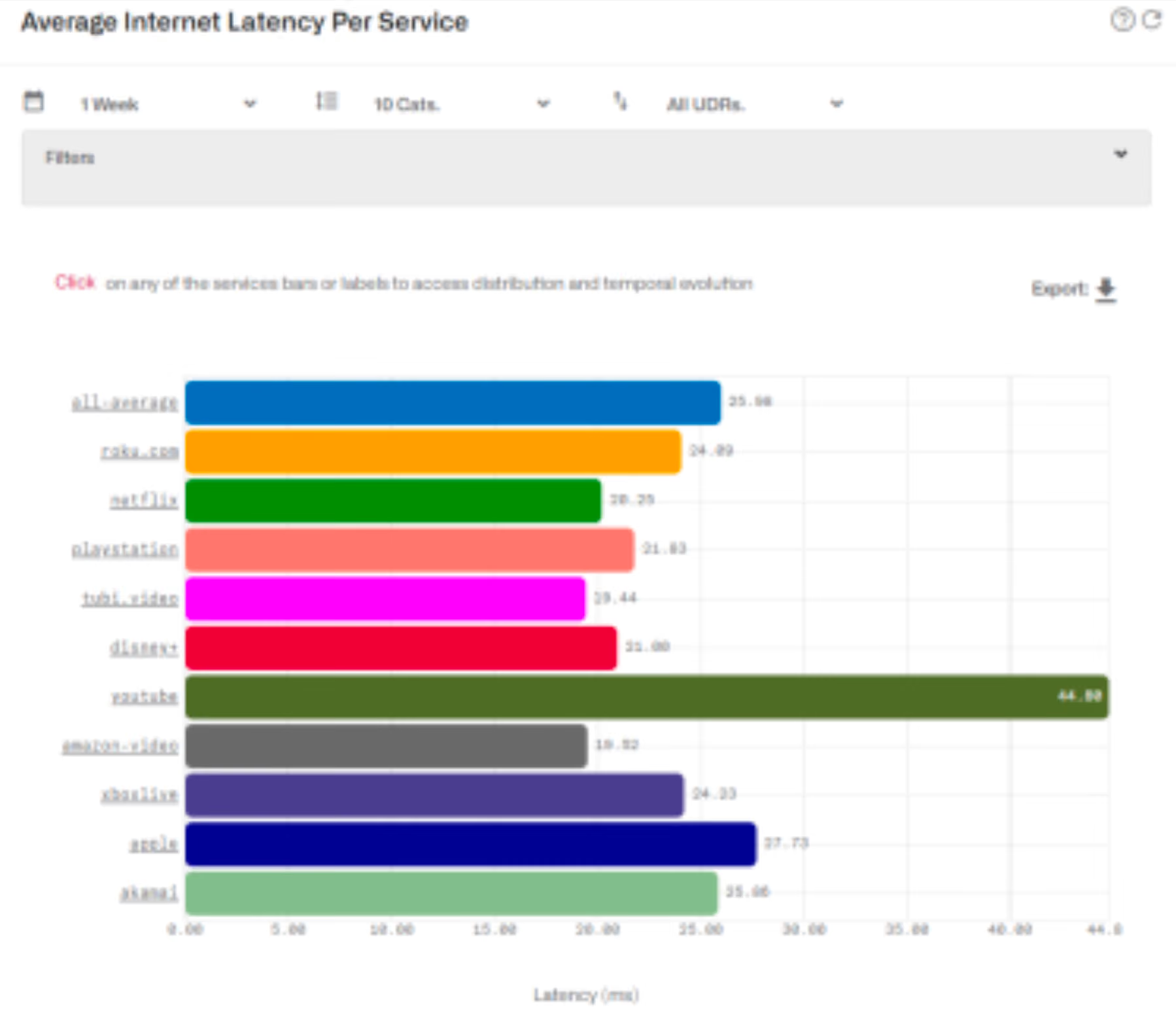
With the BQN platform and Splynx integration now active, DigitalC is equipped with enhanced visibility and a scalable QoE framework that will support their growth as they further their mission to close the digital divide.
Bottom line: For ISPs working to bridge the digital divide with limited resources, Bequant proved that you don't always need more bandwidth—you just need a smarter way to manage what you have.
At a Glance
DigitalC, a community-focused non-profit ISP, faced a common challenge for providers bridging the digital divide: managing a growing subscriber demand that has high potential to outstrip available backhaul capacity. By deploying the BQN QoE platform, DigitalC optimized its existing 1Gbps and 10Gbps circuits, integrated its Splynx billing system for seamless management, and maintained network stability even during a major fiber outage.
"Bequant's traffic shaping & application optimization got us through the heavy holiday traffic season, even before the added benefits of the TCP optimization function. BQN QoE plays a key role as we expand our footprint bridging Cleveland's digital divide."
Adrian Tetu, Head of Engineering, DigitalC
Lessons Learned
- Even with advanced wireless access technology, end-user QoE depends on holistic network visibility and traffic optimization.
- Integrating billing data with network intelligence creates powerful, subscriber-aware insights.
- Bequant QoE can make tangible network improvements, giving ISPs confidence to further scale their network.