InfoWest reduces packet ReTx by 80% while improving customers’ video experience
InfoWest, a Utah-based internet service provider serving over 33,000 subscribers, partnered with Bequant to gain deeper visibility into network performance and enhance customer Quality of Experience (QoE). By deploying the BQN QoE platform at the core of its network — upstream of its existing monitoring tools — InfoWest achieved measurable network improvements, including an 80% reduction in packet retransmissions and a substantial reduction in latency, with no reduction in customer QoE.

Background & Challenge
Serving over 33,000 subscribers, InfoWest is a Utah-based internet service provider (ISP) that offers fiber-optic and wireless internet, along with other services like VoIP, security, and TV. Founded in 1994, the company provides services to both residential and business customers in Utah and parts of Nevada and Colorado.
Offering internet service plans from 25Mbps up to 2Gbps, InfoWest emphasizes reliable, high-speed internet without data caps, and provides a range of products from basic connectivity to advanced IT solutions. Their residential and business customer access network leverages both fixed wireless broadband (FWB) as well as Fiber-to-the-Building (FTTB).
With downlink peaks over 50Gbps (over 75% of that being TCP traffic) and the vast majority being streaming video traffic and gaming, InfoWest faced a common challenge:
- Reducing network congestion in their FWB network.
- Reducing packet retransmission caused by in-home Wi-Fi in their FTTB network; the effect being a substantial reduction in per-subscriber latency.
- Maintaining high customer Quality of Experience (QoE).
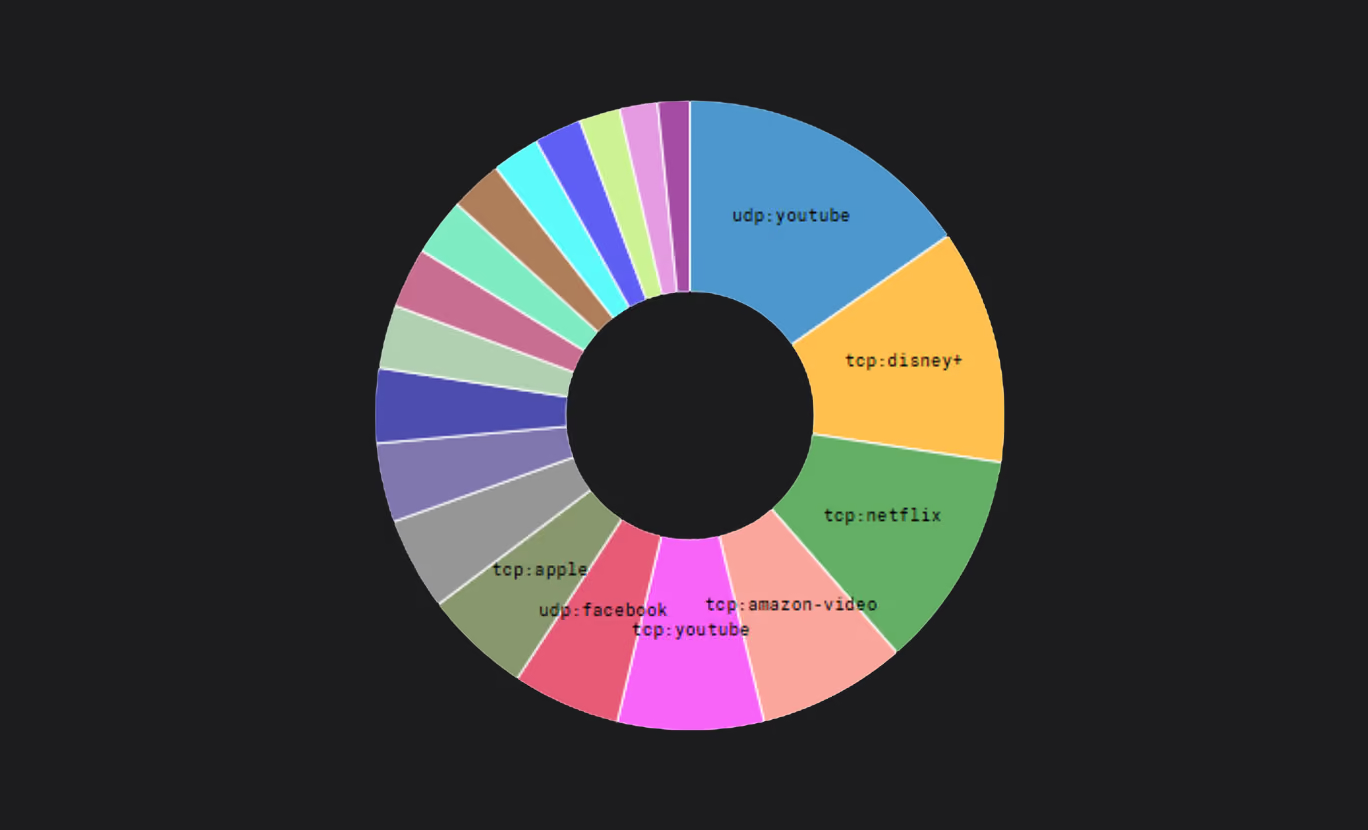
Without visibility and application-level controls, InfoWest's network management team had limited insight into applications mix and lesser controls to reduce network congestion and improve network efficiencies.
Objectives
InfoWest’s goals centered on network optimization, integration, and visibility:
- Improve key network performance indicators (KPIs):
- Increase total network goodput by reducing network latency, TCP retransmissions & traffic congestion;
- Provide an overall better quality of experience to every subscriber.
- Integrate Bequant’s BQN software with the RADIUS & Sonar Software, ensuring the network optimization engine recognizes subscriber profiles and rate plans.
- Deliver per-subscriber visibility, enabling operators to monitor and improve individual QoE metrics.
The Solution: A Process for Success
InfoWest was already operating a different cloud-based platform that monitored the existing network infrastructure to provide a centralized view of network performance using metrics and scores. InfoWest agreed to run a no-cost, 30-day pilot project with the Bequant BQN QoE appliance at the core of its network, upstream of their existing monitoring platform.
The trial and eventual go-live / production process included:
- Data Collection Phase: Passing 50% of their network traffic through the BQN appliance, InfoWest gathered several days of baseline KPI data, including latency, retransmissions, throughput, and congestion levels.
- Optimization & Review Phase: Bequant’s patented TCPO and ACM functions were activated for one week, automatically adapting to network conditions and optimizing traffic flows. KPI data before and after optimization was compared to evaluate improvements.
- Subscriber Information Integration Phase: The RADIUS integration was enabled, allowing the BQN to automatically import subscriber information—IP addresses, IDs, subscriber groups, and rate plans.
- Policy Configuration: Default subscriber flow and application optimization were applied, ensuring proper optimization per subscriber for gaming, streaming, teleconferencing, and bulk download traffic.
- Final Review & Go-live.
The combined visibility and optimization provided InfoWest with critical statistics & analytics along with network optimization that truly delivered higher QoE to their end customers.
Results
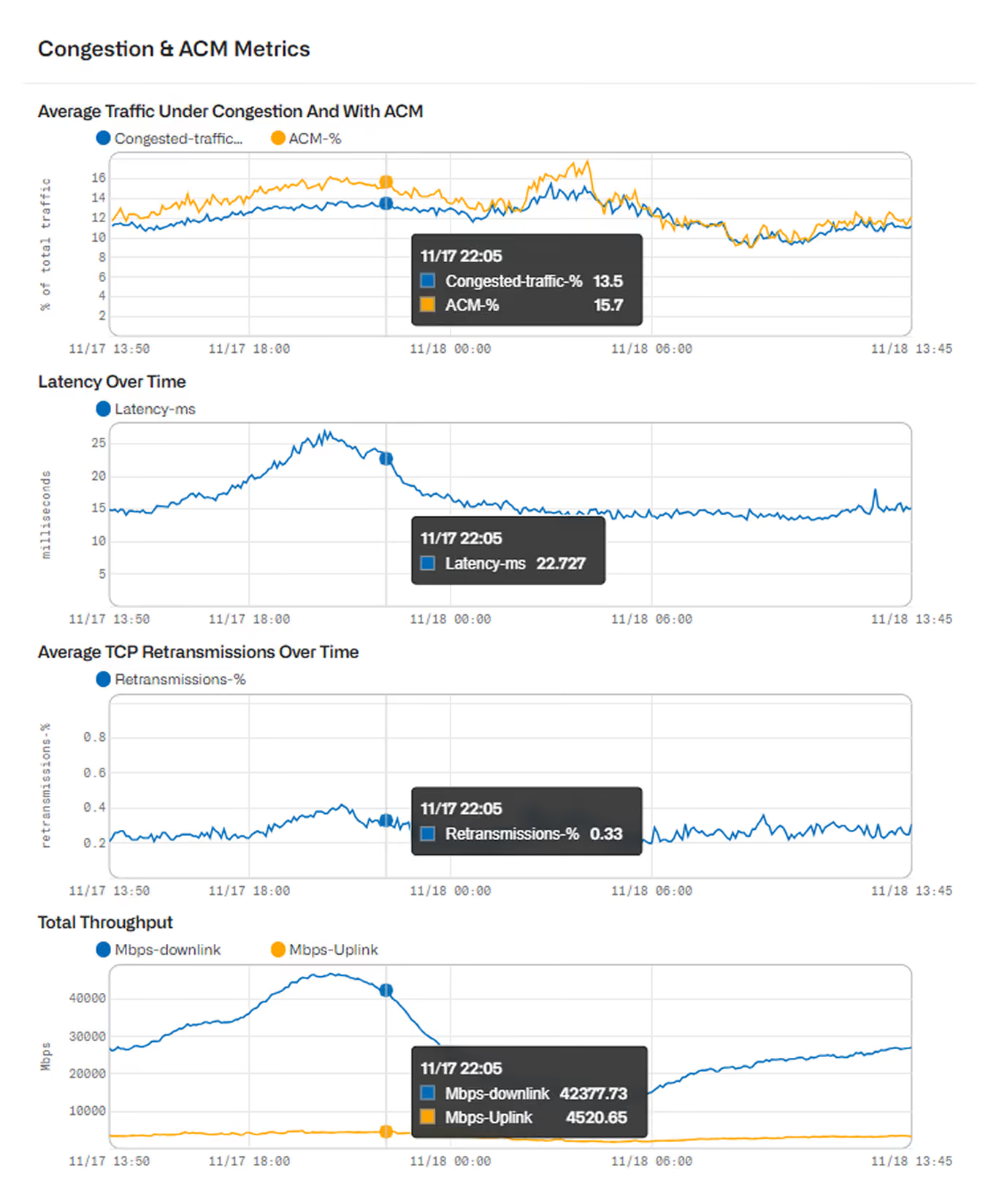
The BQN planform has been running at InfoWest for months. The results showed a significant reduction in latency and improved consistency across subscribers.
Key Metrics
- Average downlink latency across all applications and the whole network now range between 15 and 28 milliseconds with no spikes.
- TCP retransmissions are now well below 0.4%.
- Average traffic under congestion reduced now on the order of 10%.
TCP Optimization Results
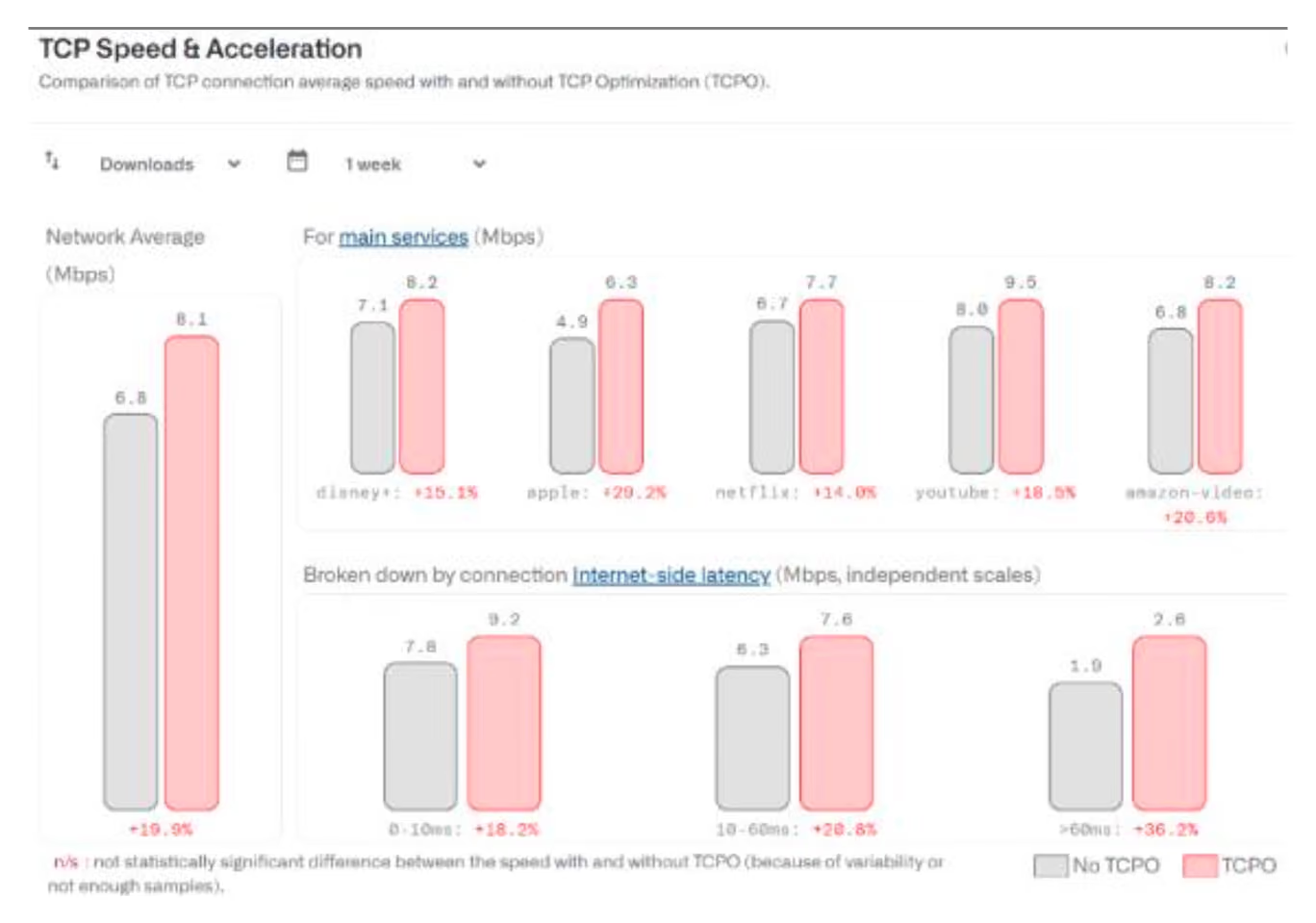
After BQN implementation, TCPO was able to improve overall network throughput by 20% on average; streaming video improvements were 15% across multiple streaming services.
Streaming Optimization Results
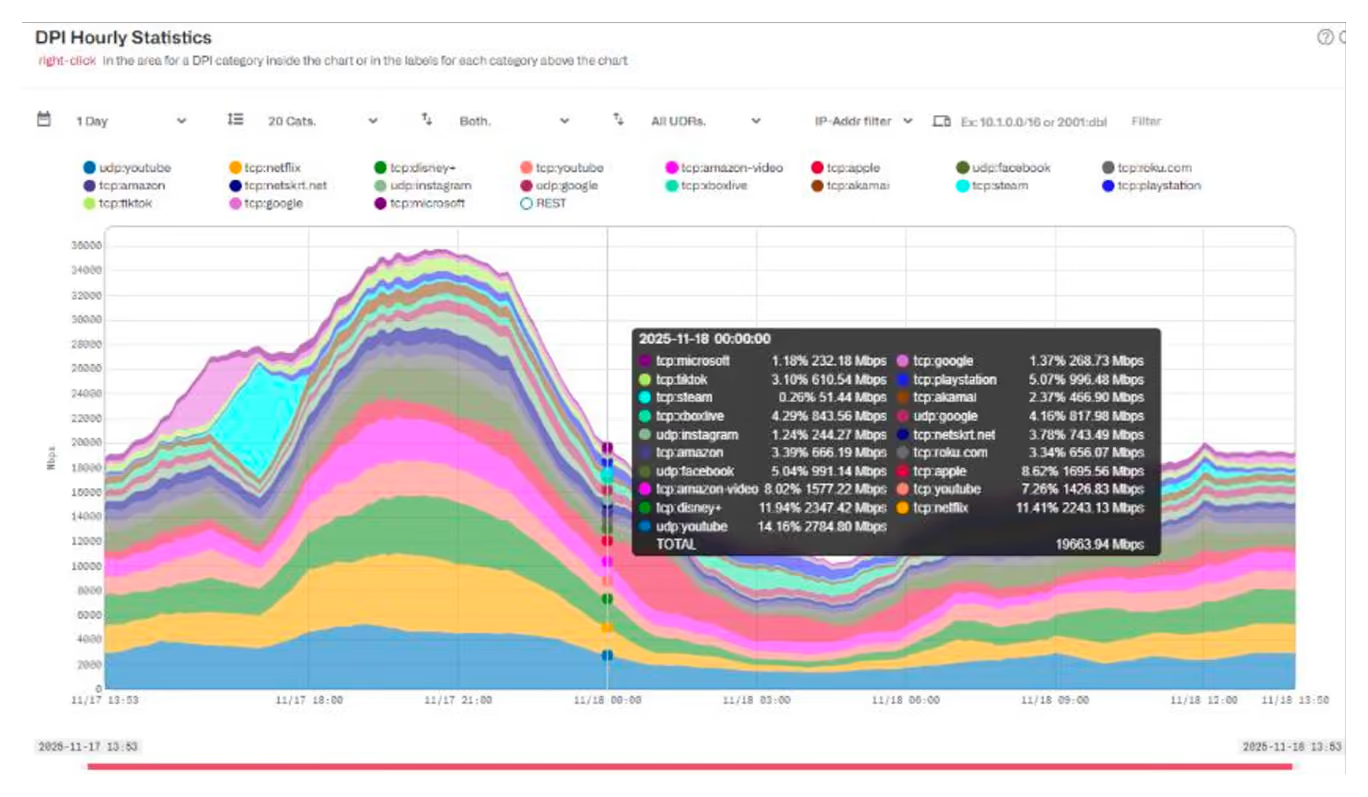
Out-of-Box flow policy that optimized streaming video traffic giving ample bandwidth to deliver a 4K high-definition non-buffering streaming experience.
Bandwidth Management
Leveraging DPI (deep packet inspection) to classify network traffic, Bequant’s Active Queue Management (AQM) automatically created multiple queues per class & per subscriber to best serve time-sensitive interactive traffic. This method negates the effects of in-home WI-FI buffer bloat.
Integration with Billing system
InfoWest’s customer database of choice is RADIUS. With Bequant’s out-of-the-box RADIUS integration, InfoWest was able to easily synchronize over 30,000 customer records with BQN appliance in a matter of minutes.
Network Visibility
With per-subscriber network KPI metrics, InfoWest was able to easily identify subscribers with weak KPIs: say, congestion caused by in-home Wi-Fi routers on their FTTB segments. The result: faster issue resolution with more proactive support.
Bottom line: Advanced fiber and wireless access technology alone doesn't guarantee a great subscriber experience. With Bequant's visibility and optimization in place, InfoWest cut packet retransmissions by 80%, reduced latency across the network, and freed up capacity for more traffic and more customers — without degrading video quality.
At a Glance
InfoWest, a regional internet service provider, partnered with Bequant to gain deeper visibility into network performance and enhance customer Quality of Experience (QoE). InfoWest achieved measurable network improvements—including an 80% reduction in packet retransmissions and a substantial reduction in latency with no reduction in customer QoE.
"If you can trim video back without degrading quality, you just have more capacity for other traffic, more customers, or just a better experience."
Cody Anderson, Director of Network Operations, InfoWest
Lessons Learned
- Even with advanced fiber & wireless access technology, end-user QoE depends on holistic network visibility and traffic optimization.
- Integrating billing data with network intelligence creates powerful, subscriber-aware insights.
- A short trial can produce tangible network improvements, helping ISPs make data-driven decisions about scaling QoE solutions.